



Real Learning in the Age of AI — Part 3
Accreditation has long been used as a marker of legitimacy in education. Universities, training centres, and institutes rely on accrediting bodies to validate the quality of their programmes and assure learners that the content meets agreed standards.
Today, however, the meaning of accreditation is increasingly blurred. AI-generated websites, institutes with no track record, and learning providers that can appear “established” overnight have all contributed to a growing confusion: What does accreditation actually guarantee?
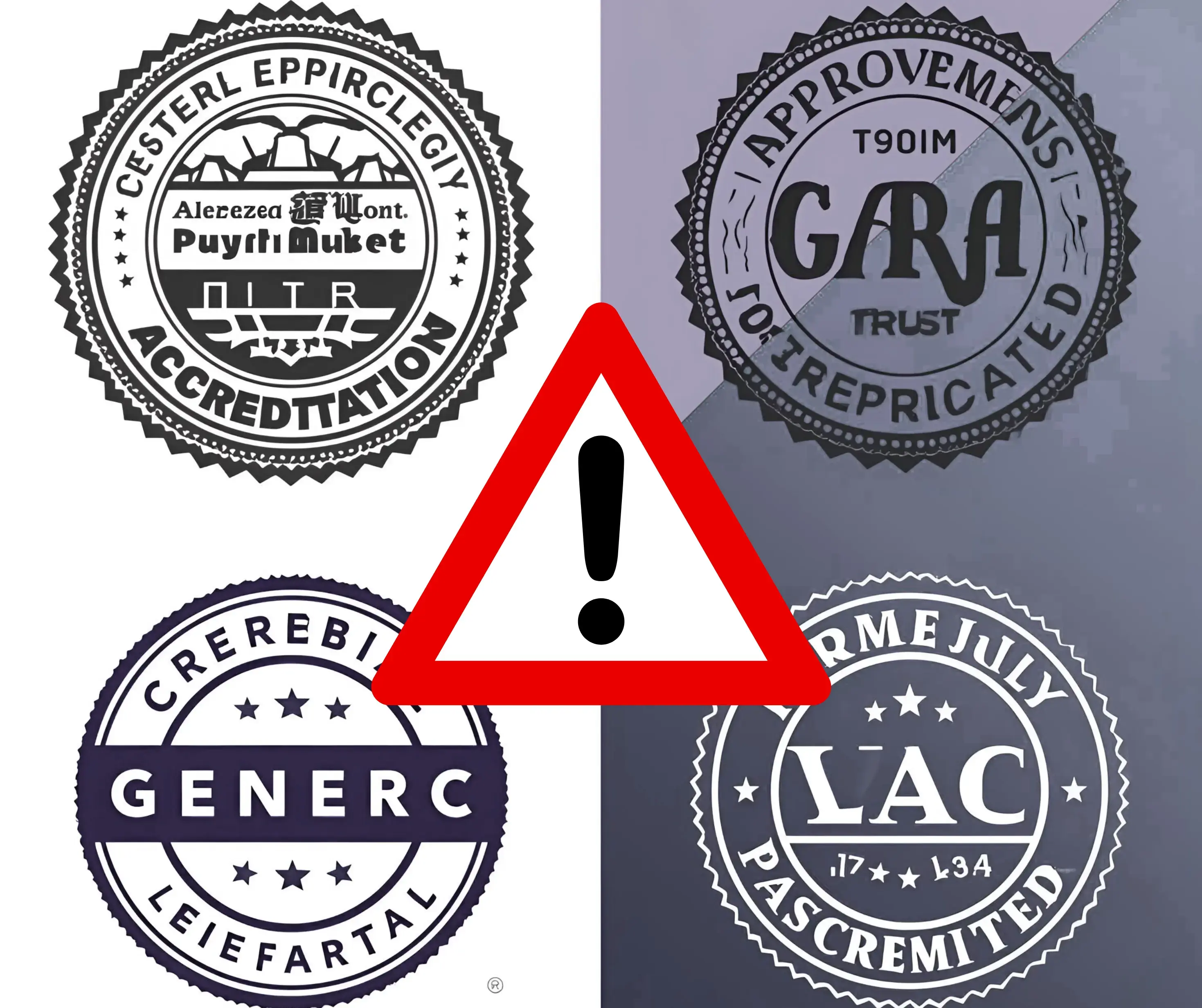
In the age of AI-saturated learning markets, accreditation remains important — but only if learners understand what type of accreditation an institution holds, how it was obtained, and what it covers. Without this clarity, badges and logos risk becoming decorative, rather than meaningful, signals of educational quality.
This third blog in CTDC’s series — Real Learning in the Age of AI — explores how accreditation functions today, what learners should look for, and how digital footprints offer deeper insight into whether a course is trustworthy.
🌱 The Inflation of Logos: Why Accreditation Feels Both Everywhere and Nowhere
Accreditation was once a relatively transparent process. A recognised body would assess the curriculum, pedagogy, institutional governance, and quality assurance mechanisms of an educational provider.
Today, however, the landscape is crowded with:
- “global certification councils” with no traceable institutional presence
- business membership organisations marketed as accrediting bodies
- companies selling accreditation packages with no substantive review
- providers using logos of affiliations rather than actual accreditation
- AI-generated badges designed to imitate respected institutions
This does not mean accreditation has lost value — it means learners must interrogate what lies behind the badge.
Not all accreditation is equal. Not all accreditation certifies content. And not all accreditation signals quality.
🧩 What Does Accreditation Actually Assess? (Often Not What Learners Think)
Accreditation generally falls into three categories — and these distinctions matter.
1. Accreditation of Learning Systems
Many respected bodies focus on organisational processes, not content.
They assess:
- record-keeping
- assessment systems
- complaints mechanisms
- Quality Assurance procedures
- learner support infrastructure
This type of accreditation confirms that an organisation has consistent systems — not that the content itself is rigorous, ethical, or contextually grounded.
2. Accreditation of Content and Curriculum
A smaller number of bodies assess the substance of the material:
- curriculum coherence
- learning design
- theoretical foundations
- pedagogical methodology
- ethical considerations
- context and applicability
This is far more demanding — and increasingly difficult in the AI era.
Accrediting bodies now face unprecedented challenges:
- How do you verify originality when AI can generate sophisticated content instantly?
- How can reviewers assess depth when AI enables rapid cosmetic coherence?
- How can accreditation ensure contextual accuracy when content is produced algorithmically?
Even established accreditation bodies are publicly grappling with these questions.
3. Accreditation of Participation Only
Some organisations offer certificates that signify simply:
“You completed the training.”
This is not inherently problematic — transparency is the key.
The concern arises when this type of certification is presented as equivalent to rigorous academic or professional accreditation.
🔍 Why Accreditation Alone Cannot Guarantee Quality in the Age of AI
Even the most reputable accreditation systems face blind spots today:
- AI can produce superficially coherent content
Reviewers may not detect conceptual shallowness or borrowed frameworks.
- Providers can submit different material for accreditation than what is delivered to learners
This is increasingly common.
- Accreditation cycles are slow; AI is fast
Content can change dramatically after accreditation is issued.
- Contextual relevance is difficult to assess globally
A curriculum that reads well on paper may be misaligned with the realities of gender, conflict, safeguarding, or governance in specific contexts.
- Structural and power analysis is rarely part of accreditation criteria
Most accreditation bodies do not review:
- decolonial critique
- feminist theory
- intersectional methodologies
- political analysis
- safeguarding ethics
Thus, a course may be accredited yet still reproduce harmful, depoliticised, or superficial frameworks.
This is not an argument against accreditation — it is a call for critical engagement with what accreditation really means.
⚖️ How Learners Can Evaluate Accreditation Claims
Accreditation can be a valuable signal — but only when interrogated.
Learners should ask:
1. Who accredited this course?
Is the accrediting body:
- named?
- researchable?
- legitimate?
- transparent about its criteria?
2. What did the accreditation process assess?
Was it:
- organisational systems only?
- curriculum design?
- pedagogy?
- ethics?
- depth of content?
3. Is the accreditation current and specific?
Does it apply to:
- the whole organisation?
- this specific course?
- an older version of the curriculum?
4. Can the claims be verified?
Can you check:
- the accrediting body’s website?
- public listing of accredited programmes?
- evidence of periodic review?
5. Does the provider misuse logos?
Some websites display:
- logos of unrelated organisations
- logos of courses the trainer attended, not delivered
- icons resembling official seals
- partnerships that do not involve accreditation
Misused logos are an immediate red flag.
🧭 Age and Digital Footprints: The Other Half of Due Diligence
Accreditation is only one part of the picture.
The history of an organisation — and the traceability of its work — are equally important.
1. How long has the provider existed?
This is not about longevity for its own sake.
It is about track record.
2. What does their digital history show?
Do social media pages reveal:
- years of posts?
- evidence of facilitation?
- real participants?
- reflections, collaborations, learning moments?
Or:
- were all posts uploaded in a single week?
- are there no identifiable humans?
- is the content entirely promotional?
3. Is there evidence of evolution?
High-quality learning providers refine their work over time.
Their history reflects:
- learning
- field experience
- methodological shifts
- responses to feedback
4. Can you see their intellectual lineage?
Real educators:
- cite others
- credit authors
- build on previous work
- acknowledge communities
A provider with no intellectual past is unlikely to have an intellectual present.
🌍 At the Centre for Transnational Development and Collaboration
At CTDC, we recognise that accreditation can be valuable when rigorous, transparent, and meaningful — and when it reflects substance, not only systems.
But our confidence in learning quality does not rest on badges alone.
It rests on:
- a documented body of work
- identifiable practitioners
- methodological coherence
- feminist and decolonial analysis
- transparent learning design
- longstanding organisational and community partnerships
- a public track record of practice-based evidence
As we prepare to launch CTDC Academy and our practice camps, we encourage learners to apply due diligence to all courses — including ours.
In a market full of logos, the real question remains:
What does this badge actually tell me about the learning I will receive?
📩 Contact us to learn more about CTDC Academy, our learning philosophy, and our commitment to responsible, transparent education in an AI-driven world.
Reach to Us
Have questions or want to collaborate? We'd love to hear from you.